
 User Login
User Login
User Login
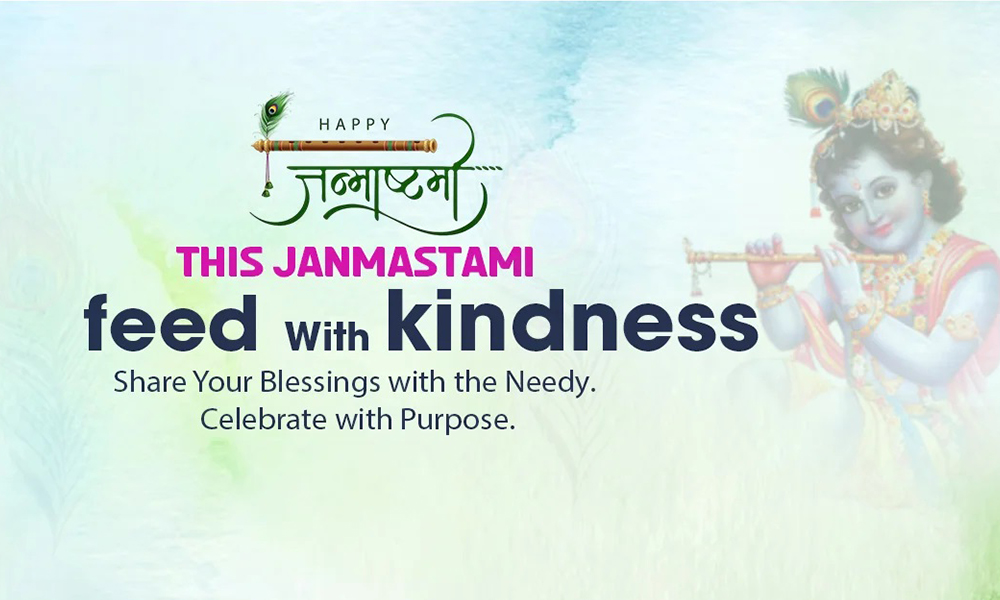
Blending Devotion with Compassion
Introduction
Krishna Janmashtami, the joyous celebration of Lord Krishna’s birth, is one of India’s most vibrant festivals. Homes and temples come alive with decorations, devotional music, and midnight prayers. While tradition and rituals make the day special, celebrating Krishna Janmashtami with a purpose adds a deeper meaning one that truly reflects Krishna’s message of compassion, service, and love for all beings.
History of Krishna Janmashtami
The festival of Krishna Janmashtami dates back thousands of years and is rooted in the sacred scriptures of Hinduism. According to the Bhagavata Purana, Lord Krishna was born over 5,000 years ago in Mathura, in the Yadava dynasty, on the eighth day (Ashtami) of the Krishna Paksha in the month of Bhadrapada.
His birth took place during a time of great turmoil. His uncle, King Kansa, feared a prophecy that Krishna would be the cause of his downfall. To prevent this, Kansa imprisoned Krishna’s parents, Devaki and Vasudeva, and killed their first six children. However, on the night of Krishna’s birth, a divine miracle allowed Vasudeva to carry the infant Krishna across the Yamuna River to safety in Gokul, where he was raised by Yashoda and Nanda.
The festival celebrates not just the birth of a divine incarnation, but also the triumph of good over evil, love over hatred, and hope over despair. Over centuries, Krishna Janmashtami has been observed with devotional songs, dance, plays depicting Krishna’s life (Rasa Lila), fasting, and the joyful breaking of Dahi Handi.
Also Read: Feeding the Soul Along with the Stomach
1. Understanding the Purpose Behind Janmashtami
Krishna’s life was more than divine play it was a lesson in living with kindness, courage, and selflessness.
When we celebrate Janmashtami with these values in mind, our festivities become acts of devotion that reach far beyond our homes.
2. Why Celebrate with Purpose?
3. Why Celebrate with Purpose?
a) Share Butter, Share Joy
Krishna’s love for butter is legendary. Instead of just offering it to the deity, prepare food and distribute it to those in need especially the homeless or underprivileged.
b) Organize Annadanam (Food Donation)
Annadanam, or feeding the hungry, is considered one of the highest forms of charity in Hindu tradition. On Janmashtami, you can support initiatives like Nithya Annadanam at Amma Nanna Anada Ashramam, where hundreds of mentally challenged orphans are served daily meals.
c) Dahi Handi with a Cause
Turn the playful Dahi Handi tradition into a fundraiser. Collect contributions from participants and spectators for a charitable cause.
d) Include the Forgotten in Your Festivities
Invite orphans, the elderly, or people living roadside to join in your celebrations. Share prasad, sweets, and blessings.
e) Spiritual Giving
Alongside offering flowers and bhajans, donate essentials such as clothes, medicines, or groceries to NGOs and shelters.
4. Making it a Family Tradition
When you involve your family, especially children, in purposeful celebrations, you pass on values that last a lifetime. Let them help in preparing prasad for distribution, decorating with eco-friendly materials, and participating in charity drives.

